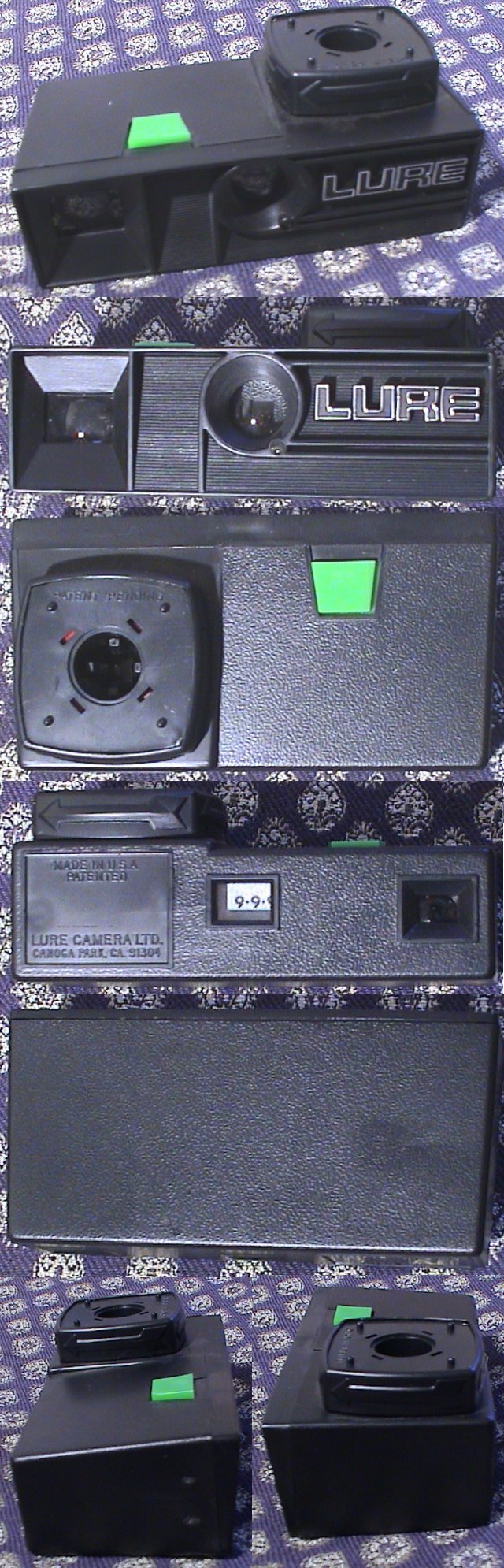
The Lure is extremely compact. Marketed at the time of the introduction 110 cameras in 1973, it uses the same 13x17mm negative size and boasts Magicube flash capability for indoor photography. For these reasons the Lure is often reported, inaccurately, to be a 110 camera. In fact it uses16mm un-perforated film.
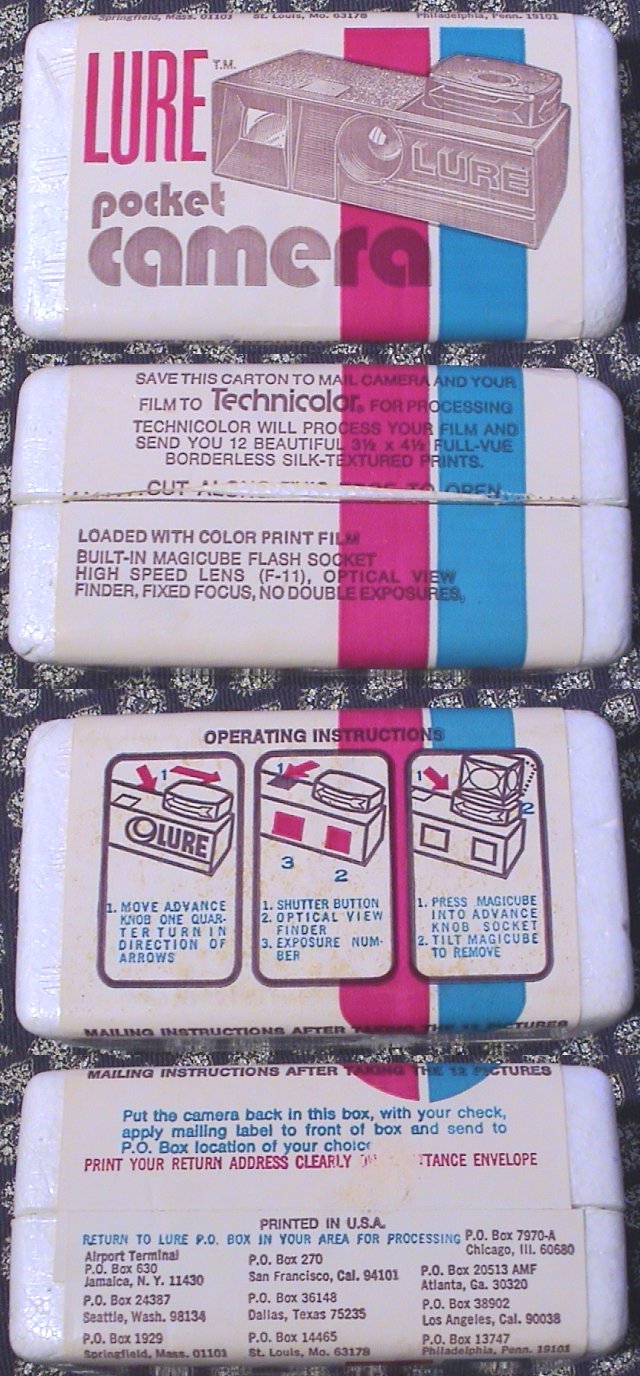
The camera does not use a cassette as the camera is disposable. It was to be sent to the laboratory for processing; the camera and a new camera were mailed back along with 3.5 x 4.5 inch prints. The camera must be broken open to remove the film, but if done carefully, the Lure can be converted to make it reloadable.
The Lure may have failed to achieve a significant market presence, but it offered features similar to basic 110 cameras while predating their arrival by several years.
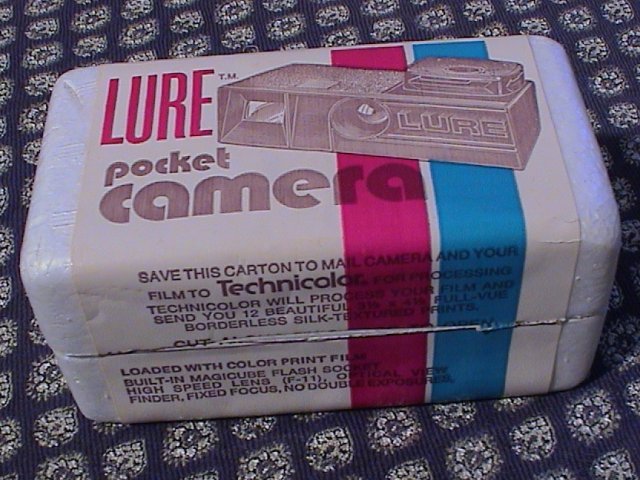
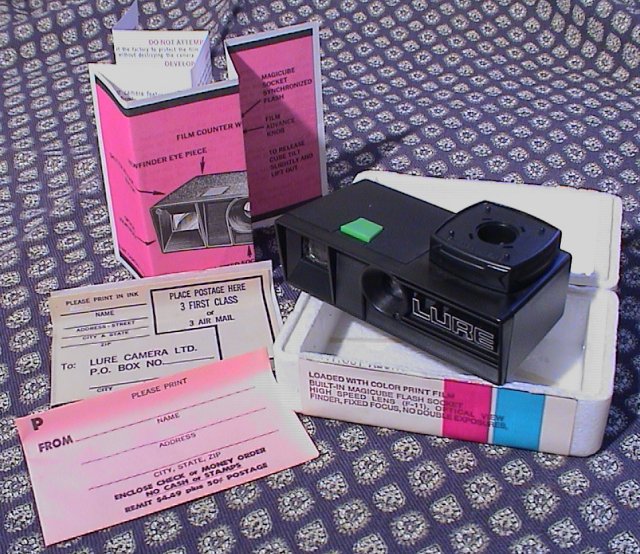
The Lure camera was sold in a small polystyrene box. It came with 12 exposure ASA 80 colour film called Technicolor pre-loaded.
The instructions indicate the following film-advance procedure: Before taking the first photograph the magic cube advance knob is given a 1/4 turn in a clockwise direction. The shutter is locked after each exposure and the frame advanced with each quarter turn. At the end of the film the shutter is released and the film is advanced four times to make sure the film is in the protective housing when it goes to the lab. The camera incorporates a two element f/11 with pan-focus from 4 feet to infinity.
Various models were available with the main differences were the name on the front and the colour of the shutter release button e.g. red or green. It was sold as "Lure X2" in Hawaii, "Blick" in Italy, "Rank" in England and the rest of Europe and "Love" in Brazil.
The camera weighs only 40g (1.5 ounces) and measures 95 x 32 x 45 mm (3.75 x 1.25 x 1.75 inches).
Ebay 2002/07/22 21.50USD, *2006/09/24 22.17USD